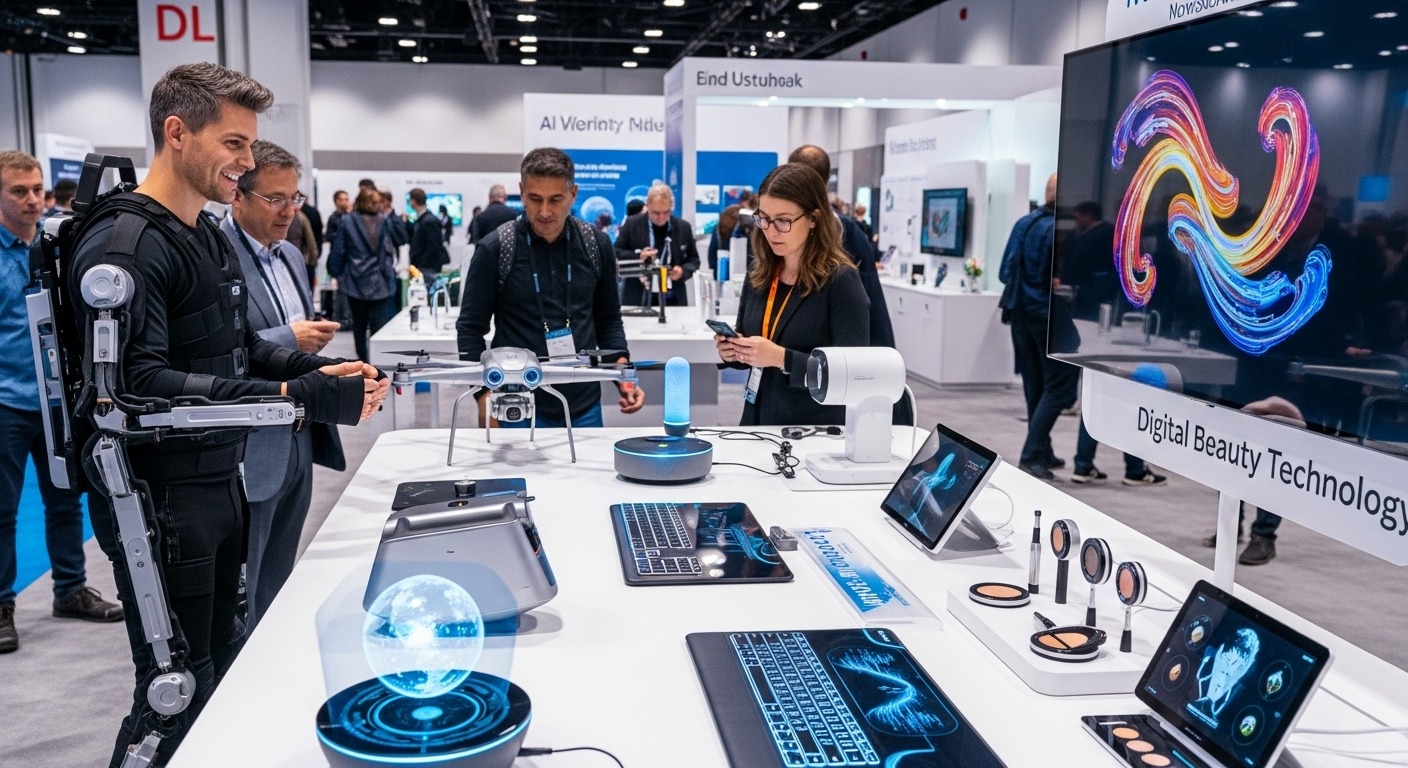
The Consumer Electronics Show (CES) in Las Vegas once again proved why it remains the world’s most important stage for future technology. With more than 150,000 attendees and over 4,000 exhibitors, CES showcased how artificial intelligence is no longer just powering smartphones and computers—it is redefining mobility, creativity, beauty, and everyday life.
From robotic exoskeletons that make humans feel superhuman to digital nail polish that changes color in seconds, the next wave of consumer technology is bold, practical, and surprisingly personal. Tech expert Katie Lynn brought some of the most exciting innovations straight from the show floor, offering a glimpse into what consumers can expect in 2026 and beyond.
AI Takes Center Stage at CES
Artificial intelligence was everywhere at CES this year. Not limited to software or data centers, AI is now embedded into physical products that people can wear, touch, and use daily. Prototypes showcased at the event revealed not only what is coming later this year, but also how technology may shape lives years down the road.
The focus has clearly shifted from abstract innovation to real-world impact—helping people move better, work faster, express themselves creatively, and live more independently.
Robotic Exoskeletons: Superhuman Mobility for Everyday Life
One of the most eye-catching technologies on display was a robotic exoskeleton suit from Hypershell. Once a concept reserved for science fiction movies and military research, exoskeletons are now entering the consumer market.
The wearable robotic suit enhances human movement by reducing physical effort while increasing speed and endurance. Katie Lynn even tested it during a 10-kilometer mountain run, reporting that it allowed her to go farther and faster with significantly less strain.
Designed for activities like hiking, running, skiing, and biking, the exoskeleton uses AI to adapt to the wearer’s movements. It feels like having a second set of legs—intuitive, responsive, and powerful without being overwhelming.
Perhaps most impressive is its impact on accessibility. Early reviews suggest that people with arthritis or mobility challenges can regain a level of independence previously out of reach. The suit does not replace human effort; instead, it amplifies it, allowing users to choose how much assistance they want.
Made from lightweight carbon fiber and weighing only about four pounds, the exoskeleton is already available on the market—marking a major milestone in wearable robotics.
The Return of the Physical Keyboard—Reimagined
Another CES favorite blends nostalgia with modern design. The Clicks powered keyboard brings back the tactile joy of physical keys—reminiscent of classic BlackBerry devices—while adding modern versatility.
This slim keyboard attaches to smartphones and can connect to up to three devices simultaneously, including TVs and tablets. It also doubles as a portable charger, making it a practical two-in-one accessory for productivity-focused users.
Available for preorder at $79, the device has generated significant buzz among professionals, creators, and anyone who prefers typing over touchscreen keyboards. It is a reminder that innovation doesn’t always mean reinventing behavior—sometimes it means improving what people already love.
Beauty Tech Gets a Digital Makeover
CES also highlighted the explosive growth of beauty technology, an area where AI and digital design are transforming self-expression. One standout product was digital press-on nail polish, offering something truly revolutionary.
These acrylic nails use a patented technology that allows users to change nail colors instantly using a small device and smartphone app. With over 300 shades available, users can switch from blue to yellow—or any color imaginable—in seconds.
The nails are applied just like standard press-on nails, and a QR code on the packaging connects users to the digital system. Whether at home or on the go, nail color can be updated anytime, anywhere.
This innovation is more than cosmetic—it reflects a broader trend of personalization powered by technology. Beauty is becoming interactive, dynamic, and digitally controlled.
Art That Changes as Fast as Your Mood
Another crowd favorite was a smart digital picture frame that allows users to change wall art instantly. Unlike traditional digital frames, this device requires no wires, produces no glare, and does not rely on a dedicated app.
Users can upload photos, illustrations, or artwork directly through a website. Even more impressive, the frame allows voice input—users can speak an idea, and the image uploads in under a minute.
This technology turns walls into living canvases, making home décor fluid rather than fixed. Whether showcasing family photos, artwork, or AI-generated images, the frame adapts to mood, season, or inspiration.
A Glimpse Into Tomorrow’s Consumer Tech
What ties all these innovations together is a clear shift toward human-centered technology. AI is no longer hidden behind screens—it is enhancing physical experiences, creativity, and independence.
CES 2025 demonstrated that the future of tech is not just smarter devices, but more personal ones. Products are designed to adapt to people, not the other way around.
From superhuman mobility to customizable beauty and art, technology is becoming an extension of identity and lifestyle. As these products move from prototypes to store shelves, they signal a future where innovation feels less intimidating and more empowering.
Final Thoughts
The coolest tech from CES isn’t about flashy specs—it’s about meaningful change. Whether helping someone walk farther, work faster, or express themselves in new ways, these innovations show how far consumer technology has evolved.
As AI continues to integrate into everyday products, the line between science fiction and daily life grows thinner. CES Las Vegas has once again shown us that the future isn’t coming someday—it’s arriving right now.