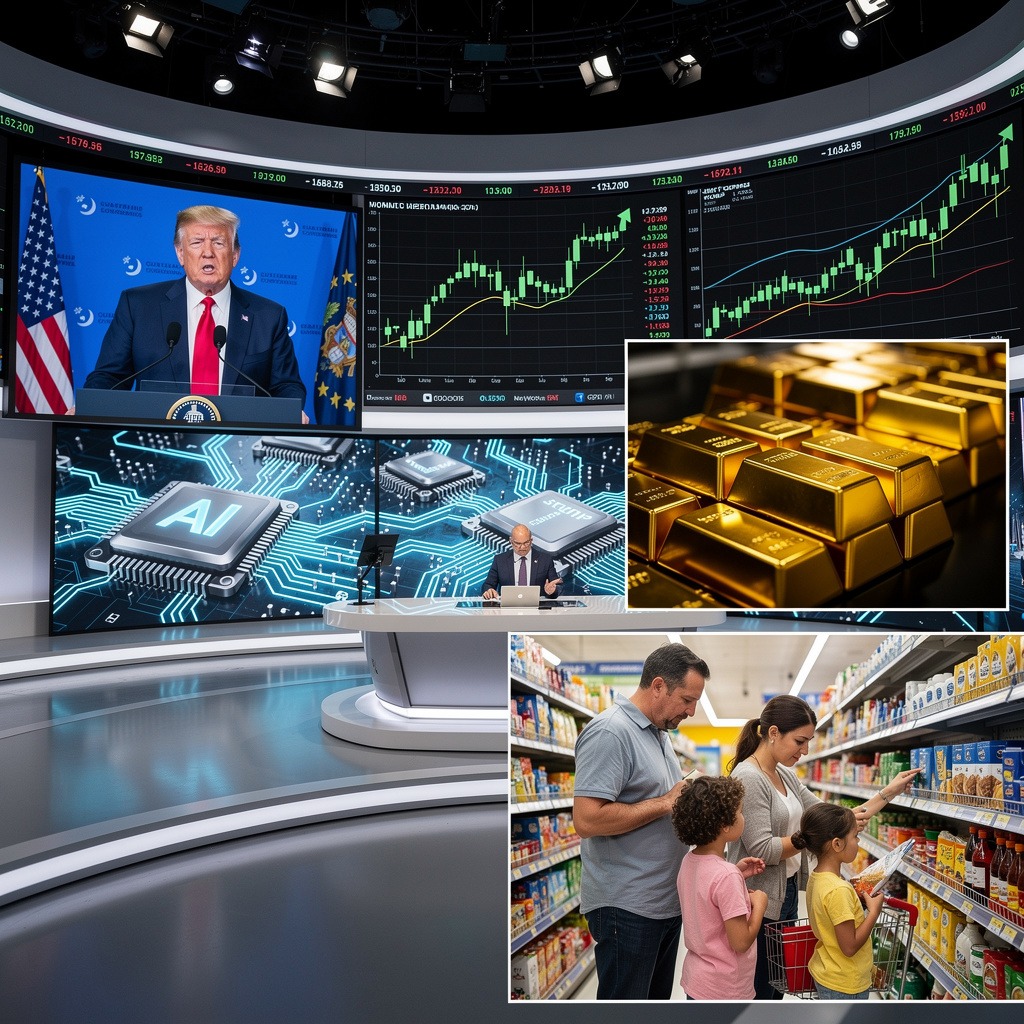
Global markets are once again caught between optimism and uncertainty as President Donald Trump’s latest comments from the World Economic Forum in Davos collide with real-world signals from Wall Street and corporate America. While momentum stocks are back in favor and artificial intelligence continues to drive bullish sentiment, consumer-focused companies like Procter & Gamble (P&G) are sending a more cautious message about affordability pressures facing American households.
Trump’s Davos Message: Big Promises, Big Questions
Speaking at Davos, President Trump struck an upbeat tone, suggesting that the U.S. stock market could potentially double this year. While such comments grabbed headlines and lit up social media, market professionals were quick to pour cold water on the idea.
Investment experts agree that while certain stocks—particularly in technology and AI—could see massive gains, a full market doubling would be historically unprecedented without explosive economic growth. For context, a doubling of the S&P 500 would require GDP growth far beyond current projections and likely much higher interest rates.
That said, Trump’s comments fit neatly into a broader narrative: confidence in American economic strength, continued innovation, and aggressive positioning on the global stage—including renewed talk about Greenland and U.S. strategic expansion.
Momentum Stocks Back in the Spotlight
Dip buyers have clearly returned to Wall Street, and they are once again hunting in familiar territory: momentum stocks, often referred to as “momo stocks.”
Chipmakers led the charge this week. AMD surged after a strong rally earlier in the week, while Intel shocked investors with a surprise double-digit move, fueled by government backing, restructuring efforts, and renewed optimism around its turnaround strategy. Nvidia’s influence loomed large, reinforcing the idea that AI-related spending remains one of the strongest secular trends in the market.
However, not every former market darling is enjoying the rally. Netflix has fallen to a fresh 52-week low, down sharply since reports of a possible Warner Bros. Discovery acquisition. Weak guidance and investor skepticism have pushed the stock out of favor, highlighting that momentum is selective—not universal.
Interest Rates, GDP, and Reality Checks
While recent GDP data showed solid growth, market strategists caution that backward-looking numbers don’t tell the full story. Rising Treasury yields suggest that stronger growth could also mean higher interest rates, limiting how far equity valuations can stretch.
Federal Reserve policy remains a wildcard. Some investors had hoped for a more dovish Fed leadership aligned with market-friendly rate cuts. However, the possibility of a more hawkish Fed chair has introduced fresh uncertainty. Markets tend to prefer predictability, and aggressive tightening or fiscal restraint could dampen risk appetite.
Gold’s Warning Signal
Adding another layer of complexity, Goldman Sachs recently raised its gold price outlook, forecasting significant upside through 2026. Historically, rising gold prices often signal lingering geopolitical risk and investor hedging—not unbridled confidence in equities.
Central bank gold buying, global uncertainty, and expectations of eventual rate easing are all fueling the metal’s rise. This divergence—bullish stocks alongside bullish gold—underscores the market’s mixed signals.
The Consumer Tells a Different Story
Perhaps the most revealing insights came from Procter & Gamble CFO Andre Schulten, who offered a candid assessment of the U.S. consumer. While P&G posted better-than-expected results and maintained its guidance, the underlying message was clear: American shoppers are under pressure.
Consumers are becoming increasingly selective—using less detergent, stretching pantry supplies, and carefully weighing every purchase. Growth in P&G’s U.S. categories is hovering around 1–2%, well below historical norms. In contrast, international markets such as Latin America and parts of Asia are delivering stronger growth.
This cautious behavior reflects broader affordability challenges, from grocery prices to housing costs. Even essential products are being rationed more carefully, a trend that raises questions about the sustainability of consumer-driven economic growth.
Shrinkflation and Value Perception
Consumer product companies have faced criticism for shrinking package sizes while raising prices. P&G pushed back on the idea, emphasizing performance, innovation, and choice across pricing tiers. From premium diapers to value-focused alternatives, the company argues that consumers remain highly sensitive judges of value.
Still, the conversation around shrinkflation highlights a deeper truth: trust between consumers and brands is fragile. In an environment where every dollar counts, perceived value matters more than ever.
Tariffs, AI, and the Bigger Picture
Tariffs remain another risk factor. P&G estimates a $400 million impact this year but says it has successfully mitigated much of the damage through productivity gains and sourcing adjustments. While new tariffs—especially involving Europe—could pose future challenges, companies are cautious about speculating without concrete policy details.
Meanwhile, AI investment continues to surge. Corporate leaders at Davos highlighted six-figure job creation tied to AI data centers, reinforcing the long-term growth narrative. Market participants widely agree that AI is not a bubble—but a structural shift reshaping industries.
What Investors Should Take Away
The takeaway from this complex backdrop is simple: optimism must be balanced with realism. AI-driven growth, strong corporate earnings in select sectors, and global innovation offer genuine opportunities. But rising rates, cautious consumers, and geopolitical uncertainty argue for diversification and discipline.
Consumer staples, while not exciting, may still play a stabilizing role in portfolios—especially if volatility returns, as it often does during election years.
Conclusion
President Trump’s bullish rhetoric has energized markets, but the real economy tells a more nuanced story. Momentum stocks are soaring, AI remains dominant, yet everyday consumers are tightening their belts. As investors navigate 2026, separating noise from fundamentals will be the key to long-term success.